 The word “sniper” comes from the snipe bird. Noted for its erratic flight it took considerable skill to shoot a snipe, particularly with the smooth bore muskets and flintlock rifles used by British sportsmen in India where the term was first used. By the 20th century it was used to describe soldiers who were able to use stealth, concealment and accuracy to shoot and kill their opponents.
Prior to “sniper” long range shoots were called either sharpshooters or marksmen. Their origins as distinct components of an organized military unit is rooted among the Native nations of the northeast. Noted for their ability use camouflage along with their skills at striking targets at a distance Native fighters were assigned specific victims, particularly officers.
The Native sharpshooter was able to disrupt field movements and cut the chain of command among the European trained armies with their bright uniformed and glittering metal rank adornments. Killing officers was dissuaded in Europe as the rigid brigade formations and highly orchestrated troop movements would have degenerated into chaos without the strict controls of the officer corps.
 Company K was an all Native regiment of sharpshooters who fought in the Civil War. Photo from Library of Congress
At battles such as the July, 1755 engagement at the Monongahela in western Pennsylvania an English army of over 1500 men were thoroughly defeated by a French-Native (Shawnees, Iroquois, Odawas, Potawatomies) force who used a well designed ambush and sharpshooters to attack from both flanks and in the ensuing panic kill General Edward Braddock. Also in the sights of the Native marksmen was a tall colonel of Virginia militia named George Washington who had bullet holes in his officer’s coat and a couple of horses shot beneath him only to escape unharmed but fleeing from the battle like the 500 other survivors who left over 1,000 casualties behind them.
Washington learned from his near death experience and applied Native tactics against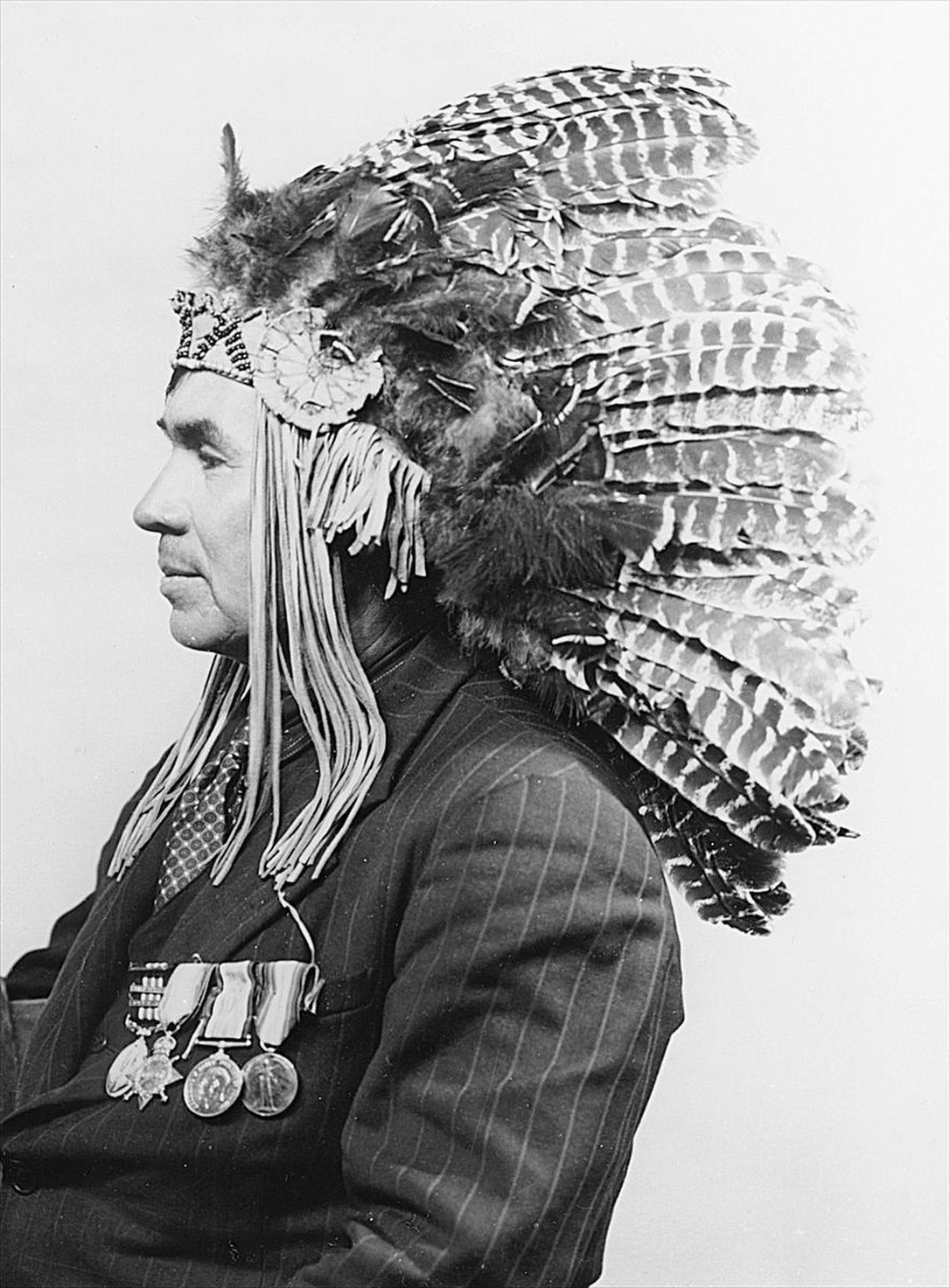 the British 20 years later including the use of soldiers trained in survival techniques, ambush and marksmanship using the Pennsylvania firearm called the “Kentucky Long Rifle” which used a grooved helical barrel invented in Germany but with an arrow equivalent developed by the Iroquois. They used arrows with a twisted feather fletch which caused the projectile to spiral with greater impact.
The Iroquois provided the colonials and the British with formal specialist training with those men called “rangers” in both armies. One unit, the British Butler’s Rangers” caused such fear and hatred among the rebel Americans than any soldier captured with its green uniform was instantly executed.
After the American Revolution the Iroquois continued to instruct its fighters in the military arts of survival off the land and sharpshooting. In the War of 1812 the Iroquois, and particularly the Mohawks, use of their marksmanship caused such terror among the Americans that they were able to defeat larger US units at a number of battles including Queenston Heights, Chateauguay, Crysler’s Far, Beaver Dams and Sandy Creek.
After that war the Mohawks carried their exceptional skills with a rifle to the far west where they worked as canoeists, traders and hunters for the Hudsons Bay, Northwest and American fur companies.
Using stealth and accuracy was essential to Native hunters as bringing home game was necessary skill to provide for their respective families. Native hunters did not kill for trophies as they knew it was essential to have the largest animals pass on their “blood” to the next generation.
In the US Civil War the Union Army actively recruited Native sharpshooters. The Oneida Iroquois were given this task as part of the 14th Wisconsin while the Ist Regiment Michigan had an entire unit of Odawa, Anishnabe and Potawatomie marksman (one requirement was to hit a 10”by 10” target at 200 yards). These shooters were hated and feared by the Confederates who, like the Butler’s Rangers, summarily executed if caught.
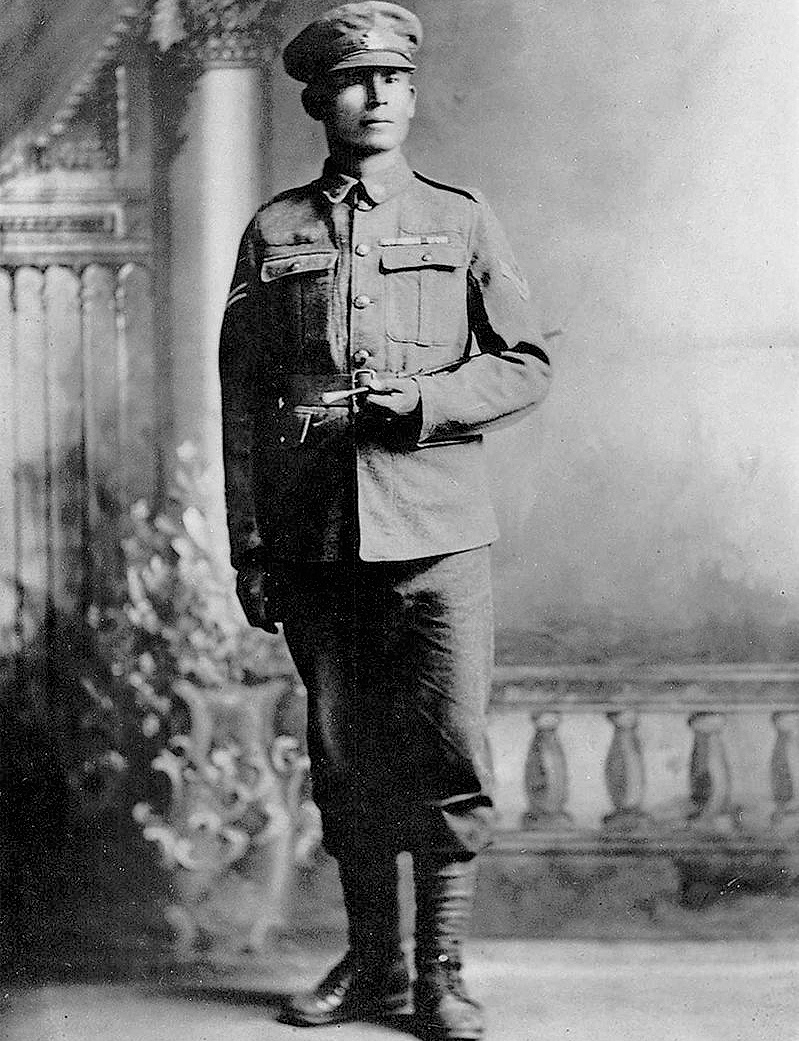
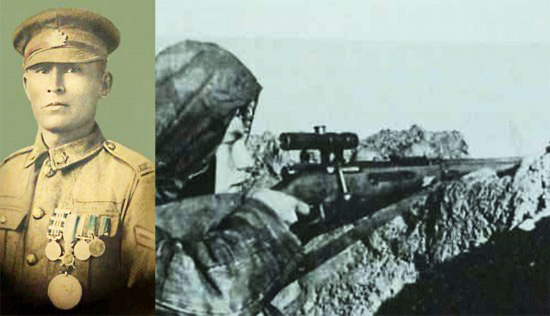
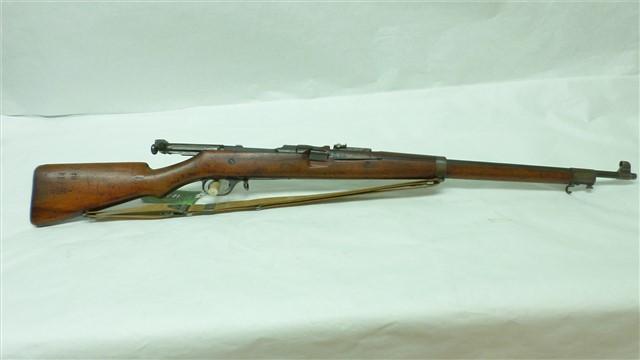
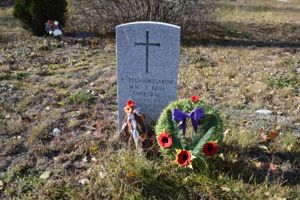
By far the most effective snipers were Natives and among these Corporal Francis Pegahmagabow of Parry Island in central Ontario, and Anishnabe of the Deer Clan, was the most lethal. Over the course of four years (1914-1918) deeply immersed in the horrors and deprivations of trench warfare, and without the technical support of contemporary snipers, Pegahmagabow killed, at a minimum, 378 Germans with many other probable’s not formally added. He did not have a specially designed .308 Winchester but used the fickle .303 Ross, a rifle of little use in the trenches as it would not fire if it had the slightest dirt in the chamber or on the cartridge. Yet it proved to have a high rate of fire and was highly accurate for striking distant targets and that it was Pegahmagabow did best.
Pegahmagabow tracked his prey alone for no one else was brave or crazy enough to follow him over the top and into “no man’s land”. He had the incredible ability to control his fears sufficient to enable him to creep into the German trenches and remove uniform insignias and other souvenirs without being detected. The Germans knew he had been there and was out hunting them and used every devise, including heavy artillery, to stop him but Pegahmagabow could not be stopped. Not only did he set the record for the entire war he captured over 300 Germans in the highly dangerous “midnight raids” favored by the allies.
For more information on this article and more. Please follow the link: https://www.indianz.com/News/2015/03/02/doug-georgekanentiio-native-sn.asp

